

Moonshot 2.0: America’s New Lunar Economy Begins
As NASA Administrator Jared Isaacman declared in his landmark address on March 24, the Moon remains “the perfect proving ground for everything America needs to explore the solar system.”
As NASA Administrator Jared Isaacman declared in his landmark address on March 24, the Moon remains “the perfect proving ground for everything America needs to explore the solar system.”

Over 1 million Americans are dead. This isn’t a crisis—it’s a war. And the system behind it is bigger than anyone wants to admit.

The Iran crisis has green propagandists claiming wind and solar are cheap and secure. The data proves the opposite. More renewables = higher prices. Every time. Here's why the physics guarantees it.

As NASA Administrator Jared Isaacman declared in his landmark address on March 24, the Moon remains “the perfect proving ground for everything America needs to explore the solar system.”

In a landmark address on March 24, NASA Administrator Jared Isaacman declared the Moon remains, “the perfect proving ground for everything America needs to explore the solar system.” With Artemis II’s first launch attempt now scheduled for April 1, 2026, the agency is poised to send four astronauts on a 10-day, 685,000-mile free-return trajectory around the Moon—the first crewed lunar voyage in more than half a century.
The mission is far more than a test flight. It serves as the launchpad for a sweeping new directive Isaacman unveiled at NASA’s “Ignition” event, directly implementing President Trump’s National Space Policy. In remarks that energized the space community, Isaacman vowed that NASA is “committed to achieving the near-impossible once again:” returning astronauts to the Moon before the end of President Trump’s term, building a lunar base, establishing an enduring presence, and taking the steps necessary to ensure American leadership in space.
“The clock is running in this great-power competition,” he added, “and success or failure will be measured in months, not years.”
The last few months, and all the work that went into Ignition, was honestly the easy part. The very hard part is everything we do from here forward..
— NASA Administrator Jared Isaacman (@NASAAdmin) March 26, 2026
We are days away from Artemis II astronauts flying around the Moon. Then we immediately begin pulling in hardware and stacking… https://t.co/lj7lvFZkDL
Artemis II will carry NASA astronauts Reid Wiseman, Victor Glover, and Christina Koch, along with CSA astronaut Jeremy Hansen, aboard the powerful SLS rocket and Orion spacecraft. The flight will rigorously test deep-space systems, life support, and high-speed reentry from lunar-return velocities—critical milestones on the path to sustained lunar operations.
NASA has already accelerated the broader Artemis timeline: an additional uncrewed test is planned for 2027, followed by at least one crewed lunar landing per year, with the goal of returning boots to the lunar surface by 2028.
 Lauren E. Low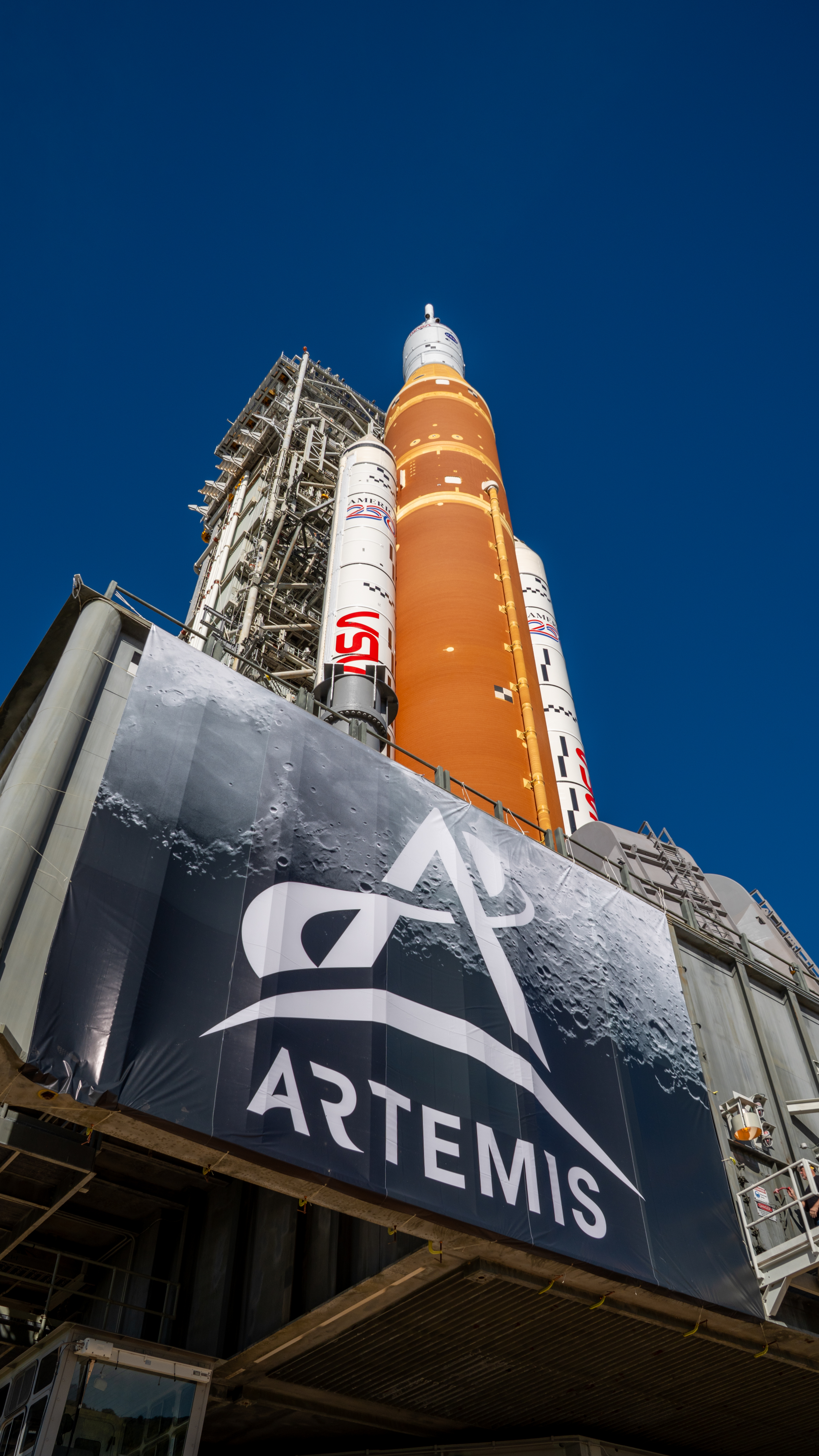
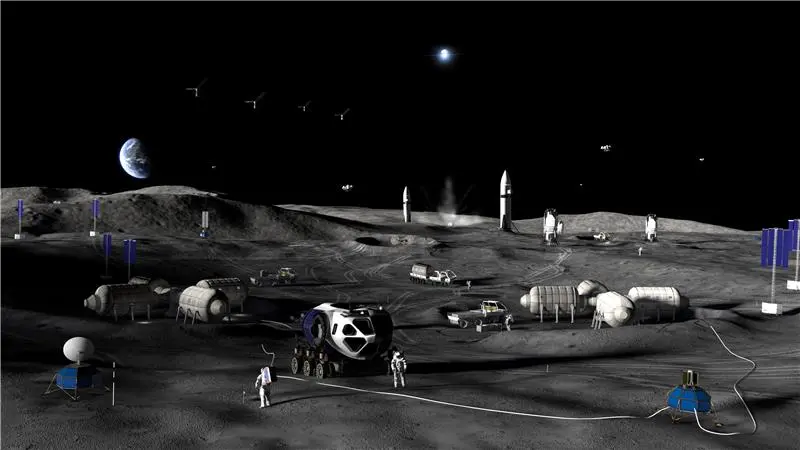
Central to the new vision is the creation of a permanent lunar base that will serve as both a scientific outpost and an economic hub. Isaacman emphasized the need to generate more value from the Moon than is invested in it: “That’s how you really ignite an economy—and ensure that everything we want to do in space is not perpetually dependent on taxpayers.”
NASA’s strategy for sustained lunar presence unfolds in three deliberate phases:
Phase One: Build, Test, Learn
NASA is shifting from infrequent, bespoke missions to a repeatable, modular approach. Through the Commercial Lunar Payload Services (CLPS) program and the Lunar Terrain Vehicle (LTV) initiative, the agency will dramatically increase the tempo of lunar activity. Rovers, instruments, and technology demonstrations will advance mobility, power generation (including radioisotope systems), communications, navigation, surface operations, and a wide range of scientific investigations.
Phase Two: Establish Early Infrastructure
Building on early lessons, NASA will deploy semi-habitable infrastructure and regular logistics support. This phase enables recurring astronaut operations on the surface and incorporates major international contributions, including JAXA’s pressurized rover and other partner-provided scientific payloads, rovers, and transportation capabilities.
Phase Three: Enable Long-Duration Human Presence
As cargo-capable Human Landing Systems (HLS) mature, NASA will deliver heavier infrastructure required for a continuous human foothold. This includes ASI’s Multi-purpose Habitats (MPH), CSA’s Lunar Utility Vehicle, and additional contributions in habitation, surface mobility, and logistics.
NASA is building SR-1 Freedom, a nuclear electric propulsion spacecraft, launching to Mars in 2028.
— NASA Administrator Jared Isaacman (@NASAAdmin) March 24, 2026
We are proud to announce this during the 250th year of the United States, the mission’s name reflects the spirit of American innovation and exploration.
This mission will bring… https://t.co/jh8kqvh243
To fuel this ambitious expansion, NASA is fast-tracking nuclear power in space. The agency plans to launch Space Reactor-1 Freedom (SR-1)—the first nuclear-powered interplanetary spacecraft—before the end of 2028. SR-1 will demonstrate advanced nuclear electric propulsion on a Mars trajectory while delivering experimental “SkyFall” helicopters to the Red Planet.
Isaacman framed the initiative as the dawn of fission power in space: “America will get underway in space on nuclear power before the end of his term.” The technology promises dramatically faster transit times, reliable surface power for lunar bases, and new commercial opportunities for private fission providers.
Commercial partners are already stepping up. SpaceX and other companies are scaling Starship lunar landers, while industry eyes opportunities in resource extraction, in-space manufacturing, and lunar tourism. By standardizing vehicle configurations and increasing launch cadence, NASA aims to drive down costs and create predictable flight opportunities—building what Isaacman calls an “orbital economy” stretching from low-Earth orbit to the lunar surface.
A permanent lunar base will host scientific laboratories, habitat testing, and resource utilization demonstrations. Technologies such as helium-3 mining, oxygen production from regolith, and water-ice harvesting could supply propellant depots and life support systems, transforming the Moon into a self-sustaining waypoint for missions to Mars and beyond.
Isaacman’s directive focuses on cutting bureaucracy, unleashing NASA’s workforce, and aligning every center behind the National Space Policy. “If we concentrate NASA’s extraordinary resources on the objectives of the National Space Policy, clear away needless obstacles, and unleash the workforce and industrial might of our nation and partners,” he said, “then returning to the Moon and building a base will seem pale in comparison to what we will be capable of accomplishing in the years ahead.”
The April 1 launch window opens at 6:24 p.m. EDT. Whether Artemis II lifts off on the first attempt or shortly thereafter, it will be watched by millions as the opening act of a renewed American space age—one that views the Moon not merely as a destination, but as the economic and technological launchpad for humanity’s future among the stars.

The Iran crisis has green propagandists claiming wind and solar are cheap and secure. The data proves the opposite. More renewables = higher prices. Every time. Here's why the physics guarantees it.

Trump is using Hamilton's playbook to fight China's minerals monopoly. DOD loans, price guarantees, equity stakes—the American System of public credit is back. Here's how it works.

NASA's Artemis program is accelerating America's return to the Moon. With crewed Artemis II launching April 2026, a faster SLS launch cadence, and nuclear-powered lunar bases on the horizon, the U.S. is reclaiming space leadership — and building the foundation for Mars.

There's no resource crisis — only a technology crisis. The critical minerals challenge proves what counts as a "resource" is defined by our technology, not nature.
Get our free newsletter. Zero Spam.