President Trump re-established the 1776 Advisory Committee to restore true American history. This paper reveals a lost 400-page manuscript proving America's founders drew their ideas from Leibniz, not Locke — fighting for intellectual independence decades before 1776.
The Supreme Court Didn't Kill Tariffs. Here's What's Actually Happening: A 17% trade deficit decline, billions in new factory investment, and a nuclear renaissance — Brian Lantz has the real scorecard.
The Supreme Court tried to disarm Trump's tariff revolution. Treasury Sec. Bessent declared Hamilton's system the foundation of sovereignty. Meanwhile, 60 nations answered Trump's call at the Board of Peace. One system is dying. Another is born.
President Trump re-established the 1776 Advisory Committee to restore true American history. This paper reveals a lost 400-page manuscript proving America's founders drew their ideas from Leibniz, not Locke — fighting for intellectual independence decades before 1776.
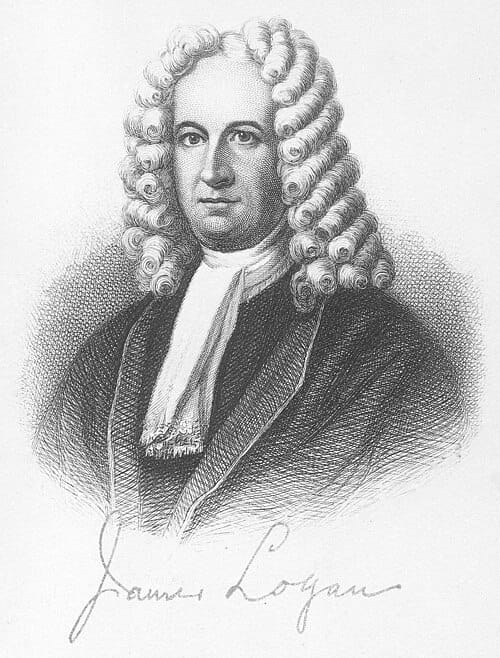
Gottfried Leibniz, not John Locke, is the author of the "pursuit of happiness" concept in the Declaration of Independence. In this AI image, Leibniz is far left, with his hand on the shoulder of founder James Logan, center, who was the mentor to the young Benjamin Franklin, far right.
President Trump's issued an Executive Order on January 25, 2025, re-establishing the 1776 Advisory Committee to restore the true history of America. He wanted this in place for the celebration of the 250th anniversary of the Declaration of Independence this year.
President Trump's issued an Executive Order on January 25, 2025, re-establishing the 1776 Advisory Committee to restore the true history of America.
This paper is a contribution to that effort.
It reveals the untold story of America's fight for intellectual independence. It is based on a rediscovered 400-page manuscript which demonstrates that independence but has, once again, been suppressed. No true understanding of the Declaration of Independence can be had, however, without taking this manuscript or its author into account.
Introduction
Today's culture is permeated by a bestial concept of Man. Hollywood's movies glorify the right of the individual to exact revenge against those power-hungry individuals who have wronged its heroes. Even music glorifies the "victims" of society raging against their oppressors.
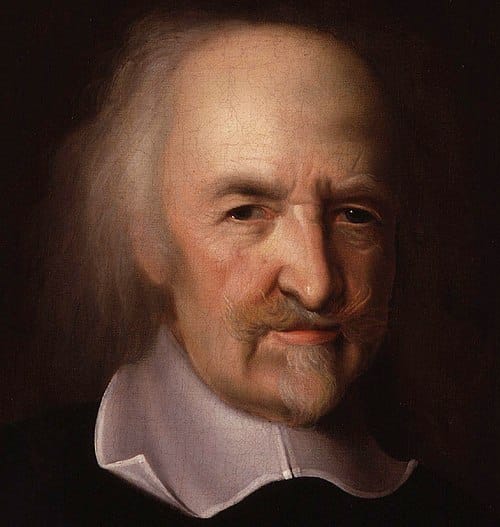
This is Thomas Hobbes' view of society as a "dog eat dog" world. According to Hobbes, man is only capable of acting in his own self-interest. Therefore, an authoritarian government is the only way to restore order, through a "social contract" to stop civilization from complete destruction. This was the justification for the newly forming British Empire in the 1680s and is the same justification for the elites' globalist "One World Order" today.
We're Not Animals
But, the success of our own American Revolution was due to a core group of the founders who embraced the Renaissance's distinction of humans from beasts.
They were committed to the concept of Man as Imago Viva Dei; that every human being was made in the image of the Creator and possessed a unique creative mind capable of discovering new principles in the Universe and transmitting them to future generations to secure the progress of humanity and the higher organization of the Universe itself.
Continuous discoveries of new principles allowed humans to develop whole new philosophical concepts of the unseen laws of the Universe. These concepts translated into technological and cultural transformations of society as a whole.
As we shall see, our founding documents were based on the higher philosophical concept of Life, Liberty and the Pursuit of Happiness, drawn from Gottfried Leibniz, rather than the idea of Life, Liberty and Property, drawn from John Locke.
These two irreconcilable concepts of Man, the Hobbesian view of Man as an unreasoning Beast vs. the Leibnizian view of Man as Imago Viva Dei, have defined the fight for our Republic from its inception to the present.
You Probably Learned False History
Although the British Empire's apologists, such as Thomas Hobbes, John Locke and Isaac Newton were thoroughly rejected by the intellectual giants who formed our nation, our own history has been rewritten to ascribe their philosophies to the founders. Not only that, their subversive ideas shape the thinking of a majority of society today.
The high level philosophical, scientific, and cultural warfare between these two concepts of man, which ultimately brought into being this first successful Republic, has almost been obliterated from the common knowledge of our citizens today.
To defeat the current threat to our nation and humanity, waged by the heirs of that British Oligarchical/Globalist system today, we must restore that knowledge to the patriots of our country now.
James Logan
James Logan is one of the most critical figures in American history. Between 1735 and 1737, Logan penned one of the most important philosophical documents in our pre-revolutionary history entitled, "Of the Duties of Man as they may be deduced from Nature."
This book is a thorough well-reasoned refutation of the theories of Hobbes, John Locke and Isaac Newton.
It demonstrates that an "intellectual independence" from the British Empire, steeped in the ideas of the Renaissance rooted philosopher Gottfried Leibniz, existed in a developing American intelligentsia decades before the formal Declaration of Independence.
Logan's 400 page manuscript was considered lost for more than 200 years until a copy was discovered in the early 1970s under some cartons stored in the Historical Society of Pennsylvania. See, The Anti-Newtonian Roots of the American Revolution. Even after its publication in book form in 2013 by Phil Valenti, an associate of Lyndon LaRouche at the time, it has been relegated back to near oblivion once again. The only place where it is publicly available is at Philadelphia's Mosey Library. [1] What follows are essential quotes from that manuscript and Valenti's groundbreaking work.
Philosopher of Empire, Thomas Hobbes
Logan vs. Hobbes
Thomas Hobbes promoted the idea that Man is by nature evil. James Logan, on the other hand in the second paragraph of his book states the Renaissance principle that Man is, "a mind endowed with the powers of reason. That establishes his supremacy above all the irrational, and every other part of the known Creation."
Logan goes on to assert the anti-Hobbesian viewpoint that "Man was formed for Society and Benevolence" pointing out that human beings were given language to communicate among themselves because they are social beings. He rejects the concept that man acts only in his self-interest by demonstrating that not only will people sacrifice themselves for their children and even for complete strangers, but people will put their life on the line for principles that they believe are necessary for the preservation of society or future generations to come.
Logan vs. Locke
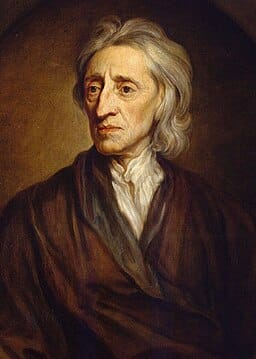
Philosopher of Empire, John Locke
Logan properly locates Locke's philosophy as derived wholly from that of Aristotle. He says,
"that there is nothing in the understanding but what was first in the sense, or … we understand or know nothing but what is derived to us through our senses. And this seems to be taken for granted not only by John Locke, so far that his whole process appears to be built on it"
Logan, acknowledges that Man's initial introduction to the world around us is due to the sense perception of the objects around us, but then goes on to pose the paradox that –
"...the powers of the mind are plainly forced by experience to expand themselves afterwards to so vast an extant, in forming within itself such infinite numbers of ideas and so very different from those first sensations, that it has appeared to the writer as if it was furnished with a capacity in itself."
He goes on:
"And that from its first simple food, the ideas it receives from the senses, it may have a further power to work up those into others vastly differing? But we need not ask why we may not, for we see in fact it truly is so."
His rumination climaxes with the following:
"Thus we have opened to us and are enabled to enter into, as it were, a new kind of world of ideas, as of virtues, vices, modes, habits, relations, obligations, duties, merit, with diverse others that cannot be directly produced by any species of simple idea of the senses."
This is a truly Platonic concept that rejects the theory promoted by John Locke in his 1689 Essay Concerning Human Understanding that the mind is a blank slate or Tabula Rasa.
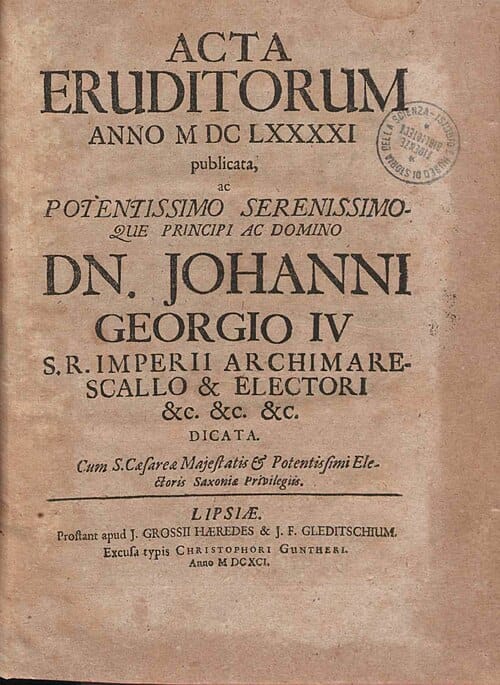
The journal publishing Leibniz's writings which Logan studied and lent to other founders in Philadelphia.
Logan, Leibniz and Newton
Logan, possessed all but three years of the 1682 founded monthly scientific publication Acta Eruditorum. That publication featured many of Gottfried Leibniz's most important scientific works. In 1697, it was the forum for the dispute between Leibniz and Newton over who founded the Differential Calculus.
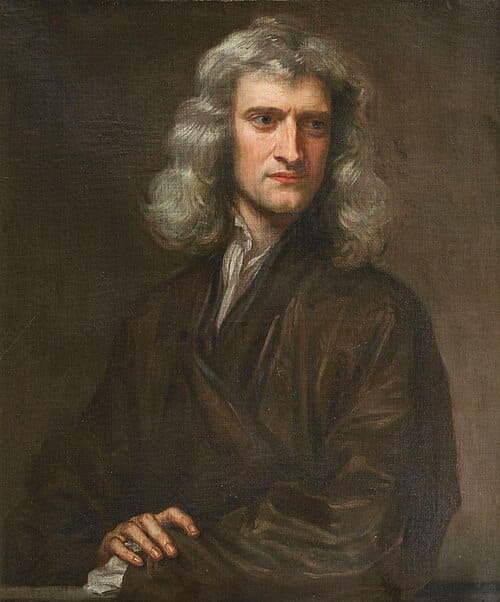
Logan decidedly supported Leibniz in the claim by Newton, that Newton, not Leibniz, was the discoverer of the calculus. Logan states explicitly in a letter to New York Governor Burnett that,
"It is certain the world was obliged only to Leibniz for the publication of that method, who was so fair to communicate it in a great measure to Oldenburg in 1677." [2]
Sir Isaac Newton who famously stole Leibniz's invention of the differential calculus from Leibniz.
In 1684, Logan wrote a detailed analysis of The first Account of fluxions delivered by Leibniz in the Acta Eruditorum of Leipsic of October 1684. Logan also went beyond that to systematically refute Newton's fundamental theories of science.
On Newton's assertion that the universe is composed of hard particles existing in a vacuum, Logan uses the example of a vacuum tube, an example that Franklin later uses in his own refutation of Newton. Logan says that although the air is emptied out, light obviously penetrates it.
In the same vein of reasoning, Logan puts forth the following anti-Newtonian hypothesis, stating,
"Can we be sure that there is no electric or elastic medium that instead of obstructing or retarding motion, may be the very means of conveying it".
Sign up for Promethean Action
Promethean Action is a political movement dedicated to defying oligarchy & unleashing the fire of human creativity!
No spam. Unsubscribe anytime.
He goes on to convey a universe based on reason and beauty, stating,
"…undoubtedly, to have a Universe possessed by some kind of matter is much more consistent with the dignity, beauty and order of the whole, than to imagine those vast voids which carry a kind of horror in the thought."
Logan's fertile mind even recognized the revolutionary potential that an understanding of electricity could have in overturning the Newtonian vacuous, static theories of the Universe, a decade before Benjamin Franklin started his experiments.
He asserted that electricity was,
"…a field open for speculations that, if duly pursued, may probably lead us into more just and extensive notions of our bodies and the world we live in, than have hitherto been generally thought of."
James Logan Impact
James Logan, American Leibniz scholar and mentor of Benjamin Franklin.
James Logan had many titles, Secretary to William Penn, Mayor of Philadelphia, Chief Justice and Acting Governor of Pennsylvania, founder of the University of Pennsylvania.
But his chief title, I would argue, was philosopher in chief. Logan's lost work was written explicitly for the purpose of developing an independent American intelligentsia and, specifically, to inspire and educate the young genius Ben Franklin. Franklin was encouraged by Logan to review and critique the manuscript as it was being written.
In Chapter 6, Logan even singles out and refutes the young, misdirected Franklin's 1725 pamphlet where he defended Locke's evil British doctrine that pleasure and pain were the soul motivations of Mankind.
Logan's Prodigies
Besides Logan having opened his extensive library for use by Ben Franklin, he collaborated with other young developing minds.
For example, Thomas Godfrey, a glazier who worked for Logan, showed an aptitude for mathematics and science. Logan personally taught Godfrey Latin and gave him access to all the mathematical and scientific books in his library.
Godfrey then discovered a method to measure Latitude, useful for seafarers, and built a sextant capable of doing that. Logan submitted the original design to the British Royal Society and when the British scientist, Hadley, claimed the discovery as his own, Logan fought for Godfrey's just recognition for the original discovery.
Logan was crucial in developing Philadelphia into a city that valued cultural, scientific and philosophical inquiry, which fostered the development of genius well beyond Logan's lifetime.
To aid that commitment, Logan willed his three thousand plus library to the first lending library in America, the Philadelphia Company Library, established by Ben Franklin. While the works of John Locke were among the earliest books purchased, the library also contained the Leibniz/Clarke Correspondence where Leibniz refuted Newton's concepts of the universe as composed of hard particles operating in a vacuum.
Ben Franklin's Mission
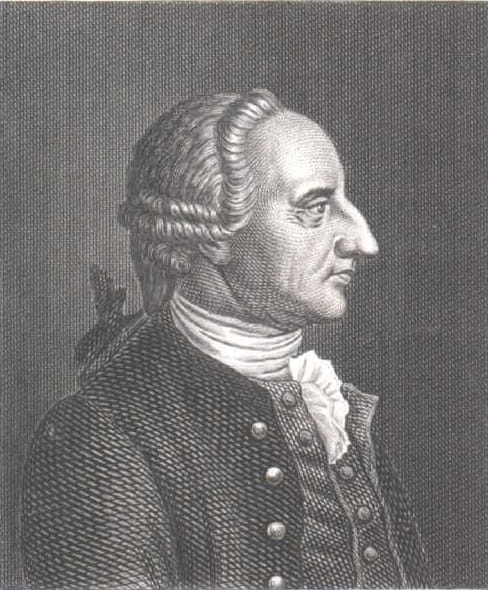
Franklin collaborator and Leibniz scholar, Abraham Kaestner.
After the death of Leibniz in 1716, Queen Caroline, in collaboration with Franklin's friend, the Halle trained Baron von Munchausen, set up Goettingen University.
One key figure at Goettingen was Professor Abraham Kaestner, who coordinated a project to copy and print the works of Leibniz, which had been suppressed.
The most important for America's founders was Leibniz's famous rebuttal of Locke called the New Essays on Human Understanding. As early as the 1740's, Franklin was in correspondence with Halle and Gottingen trained individuals on shaping a curriculum for his newly founded Philadelphia Academy.
Franklin had already been in written dialogue with Kaestner since the mid 1740's. In 1748, Kaestner published a German edition of the scientific theories of Franklin's scientific collaborator, Cadwallader Colden. He praised Cadwallader's theories as being very similar to the anti-Newtonian theories of Leibniz.
In 1752, Kaestner made a failed attempt to send a personal emissary to America to meet with Franklin and present him with a copy of Johannes Kepler's Harmonice Mundi. In 1765, Kaestner's collaborator Rudolph Raspe published Leibniz's New Essays on Human Understanding. One year after that, Franklin spent two weeks in Goettingen meeting with Kaestner, Raspe and others.
A copy of the 1765 edition of Leibniz's New Essays on Human Understanding is listed in the catalog of the Library Company of Philadelphia… with a preface by Kaestner. Ben Franklin also purchased six scientific treatises by Kaestner for his own Library.
Logan, Franklin and Intellectual Independence
Logan and Franklin were very aware that their ideas might be considered 'heretical' to the British dominated world of philosophical empiricism. In directly challenging Newton's assertion of a vacuum, Logan stated-
"If there be no heresy mentioning it in the present age, why may we not venture to question the reasonableness of asserting a vacuum as indispensably necessary to the continuance of motion."
Franklin was even more direct stating in a letter written in 1752 to Cadwallader Colden-
"Tis well we are not, as poor Galileo was, subject to the Inquisition for Philosophical Heresy. My Whispers against the orthodox Doctrine in private letters, would be dangerous; your Writing and Printing would be highly criminal. As it is, you must expect some Censure, but one Heretic will surely excuse another."
Leibniz recognized the unique quality in man to have creative insights into the principles acting within the universe and thus to develop new technologies that increased man's mastery over the universe. This redefined the concept of true economics. Only a society that recognized and fostered that creativity within its citizenry and actively promoted the sciences, manufacturing and infrastructure could assure its and mankind's existence in the future.
This was the philosophical and cultural environment that nurtured the minds of the American Geniuses like Logan and Franklin and inspired them to create a unique American System of Economics to secure and establish the only successful Republic in history.
The Fight Today
Writing in 1987, in his book, The Power of Reason, Lyndon LaRouche noted his own debt to Leibniz, and Leibniz' influence on the founders.
". . . economic science was founded by Gottfried Leibniz during the period 1672-1716. Leibniz designed the principles of what was later called the "industrial revolution," known then as the principles of heat powered machinery, and more broadly as the 'physical economy' curriculum which Leibniz introduced to the branch of university instruction in statecraft known as cameralism. In this connection, Leibniz discovered the conception of 'technology,' and was the first to supply a rigorous mathematical-physics definition for technology.
Leibniz's economic science was adopted by the founders of the United States and incorporated in what Alexander Hamilton was first to name 'the American System of political-economy.' This economic science was adopted in explicit opposition to the doctrine of the British East India Company's Adam Smith, and was the economic policy on which our constitutional republic was founded."
Now, President Trump and his cabinet are actively studying and using the American System to bring us out of our recent dark age. Trade Advisor Jamison Greer just made that clear in his speech at Davos on January 20, 2026.
As I wrote in the beginning, the greatest crime committed by the Globalists today has been the almost total obliteration of true American history. Their world outlook is in every way as Satanic as the British Empire of King George III.
When Americans realize that they are tasked with the joyful responsibility to restore, protect, and advance the Renaissance ideas that made our nation unique in world history, the true American Spirit will be rekindled on a scale that leaves the British/Wall St. globalists in history's dustbin.
Let us finish the American Revolution in such a way as to be the beacon of hope for the rest of the world; that they too may discover the significance of "the pursuit of happiness," our unique founding documents, and the philosophical mindset truly behind them.
The history you just read has been deliberately buried for over 200 years. We're digging it back up.
Promethean Action produces the research, videos, and analysis that restore the true American intellectual tradition — the ideas that actually built this Republic.
But we can only keep doing this work with your support.
For just $10 a month, you help us keep this fight alive and put these suppressed ideas back into the hands of patriots who need them. Subscribe today and become part of the effort to finish the American Revolution.
Activist with LaRouche since the 1970s. Author and speaker on the culture of the American Revolution, Ben Franklin, and James Logan. Follow my Substack, “Creating a New American Intelligentsia.”
Hamilton's National Bank was nothing like the Federal Reserve. It funded manufacturing and infrastructure, was audited by Treasury, and couldn't monetize government debt. His system of Sovereign Public Credit built the nation.
He was the spark that lit the American flame. Discover the "American Prometheus" who championed science and industry, creating a visionary system dedicated to unleashing human potential and building a productive nation.
He was the spark that lit the American flame. Discover the "American Prometheus" who championed science and industry, creating a visionary system dedicated to unleashing human potential and building a productive nation.