Iran isn't about Iran. Canada isn't about Canada. China isn't about tariffs. Every fight this week traced back to the same return address — and Trump has found it. Plus Zoomers, Bretton Woods, and Beethoven.
A full-size statue of Beethoven once stood behind the Boston Symphony. Toni Sellars and Mindy Pechenuk on how deep this music ran in 19th-century America — and who spent the next century getting it out.
Yesterday, at the SpaceX Starfactory in Starbase, Texas, Elon Musk presented his framework for building a new civilization on Mars. Even for those of us who have been closely following the Superheavy/Starship development program, Musk's vision is stupendous.
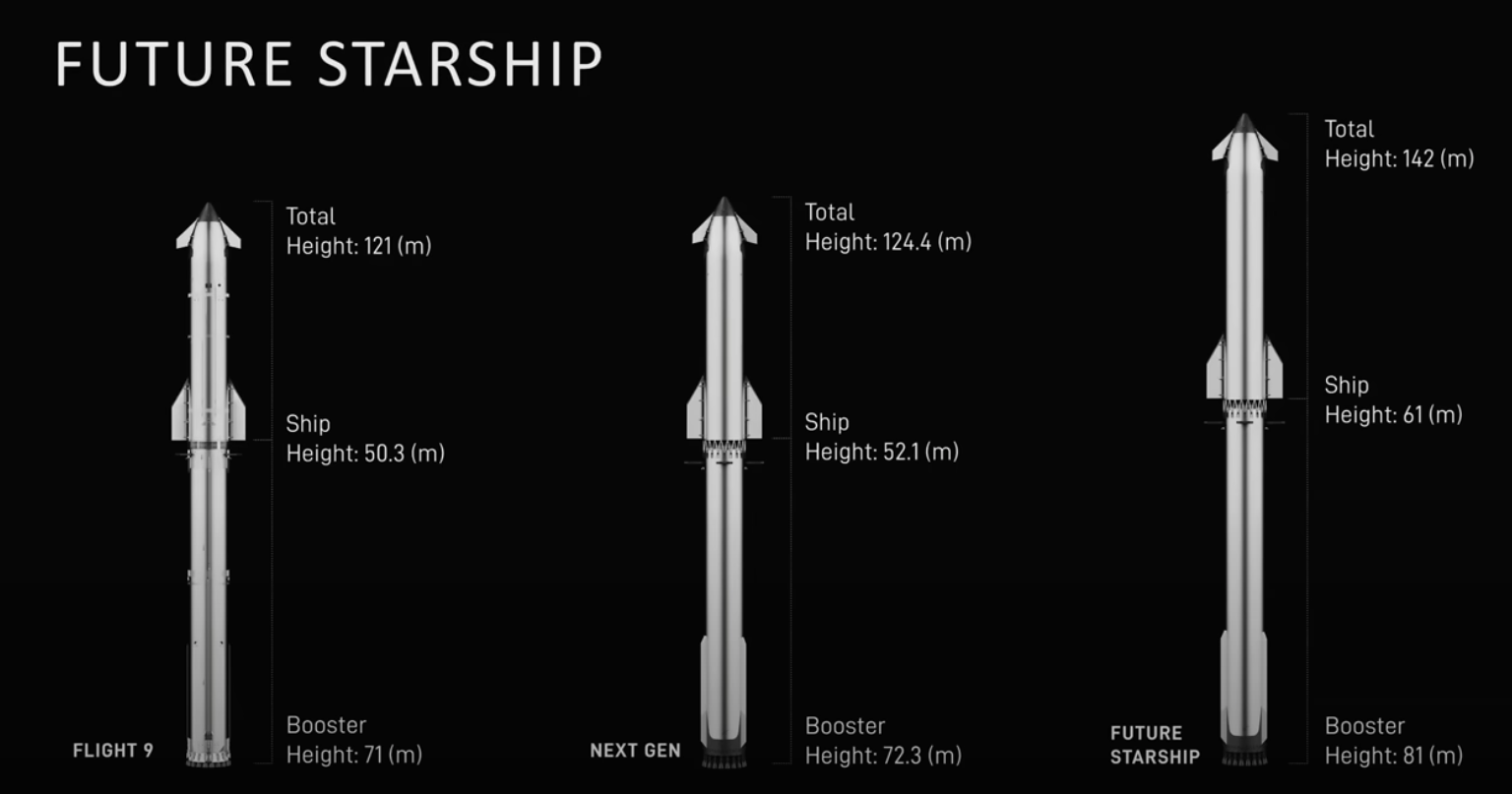
At the SpaceX Starfactory in Starbase, TX, on May 29, Elon Musk presented his framework for building a new civilization on Mars. Even for those of us who have been closely following the Superheavy/Starship development program, Musk's vision is stupendous. Imagine fleets of 2,000 Starships leaving Earth orbit every 2 years heading off to Mars. Each Starship will deliver 2.5 times as much mass to orbit as the previous record holder, the Saturn V. Imagine delivering somewhere between a million and 10 million metric tons of supplies and equipment to the surface of Mars.
Starship has room to grow.
The Starfactory is designed to produce 3 Starships a day! The Superheavy is designed to fly, return to its launch tower and fly again within an hour or two.
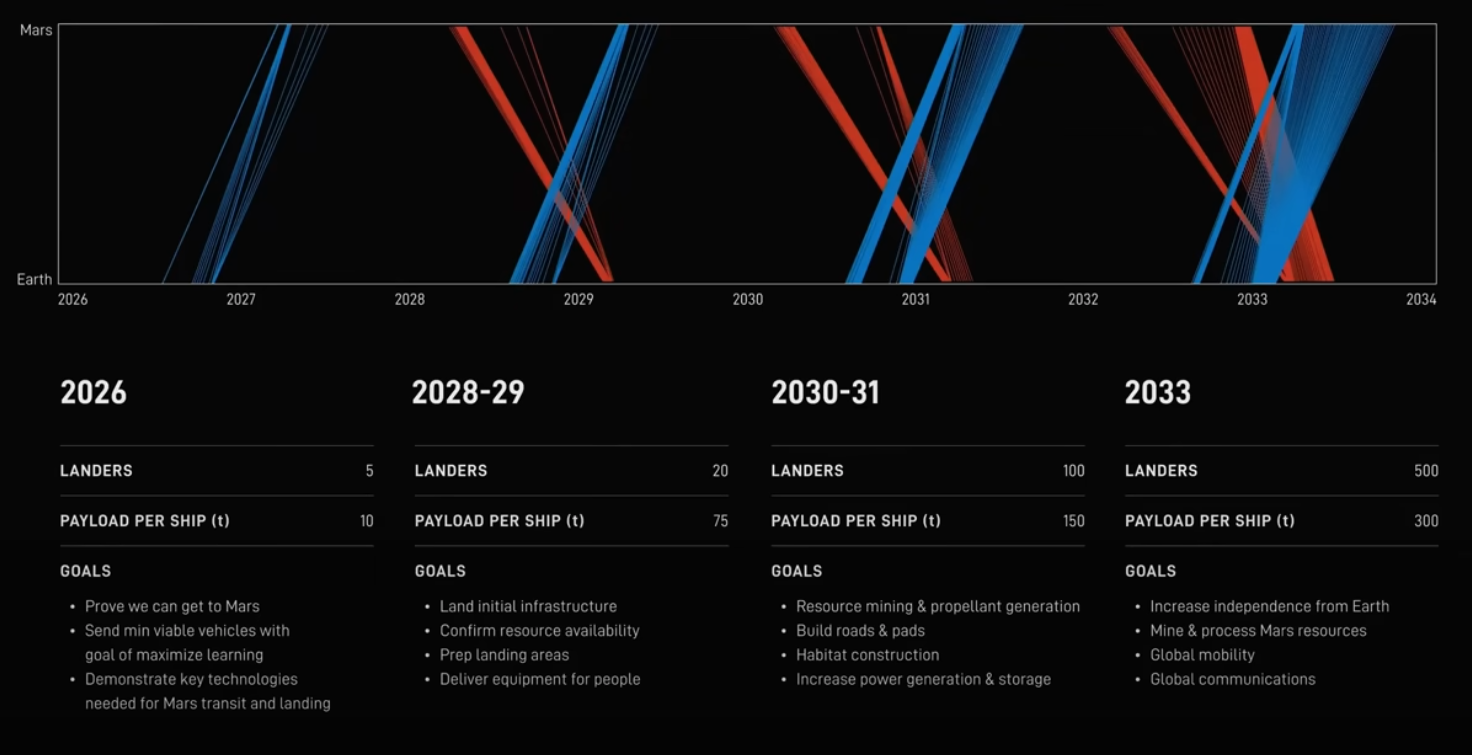
The framework is still being designed, but progress is being made at an incredible speed. In general, his plan is to send 5 Starships with Tesla Optimus humanoid robots and other equipment to Mars next year. If that works well, humans could follow at the next planetary alignment in 2 to 4 years.
Some of SpaceX's goals for Mars over the next 10 years
Needless to say, there are still many, many problems to be solved on the critical path to making this a reality. First, each Starship will need to be fueled in orbit by as many as 10 or 15 tanker Starships before heading off to Mars. That must be tested and proven next year. Then, there is the issue of building a robust and reliable heat shield capable of not only handling the Earth's atmosphere, but also the mostly CO2 atmosphere of Mars. Oxygen is very reactive!
What About People?
All of that sounds great for freight. Typically, robotic flights to Mars have taken six-to-nine months. But that was with greatly constrained rocket capabilities. What happens when you can refuel the giant Starship in orbit before heading out? Can you trade propellant for time? Probably, to some extent. Still, it reminds me of our ancestors coming over in steerage. And the longer the transit, the greater the exposure to dangerous deep-space radiation.
To make the trip less of an ordeal, we've got to work on speeding up the process. In parallel with what SpaceX is doing, DARPA, NASA, and Russia's Roscosmos are working on Nuclear Thermal Rocket (NTR) rockets which can use the heat from a reactor to accelerate propellant out a nozzle. And there are at least three companies working on fusion rocket designs. The sooner that one or more of these entities can come up with fission or fusion space tugs to speed up the trip for people, the better. And the Starships should be designed to dock to tugs.
Right now SpaceX's Starlink communications business is funding this. Governments, companies, and people across the world should contribute ideas and hardware to the project. It will pull us all forward together.
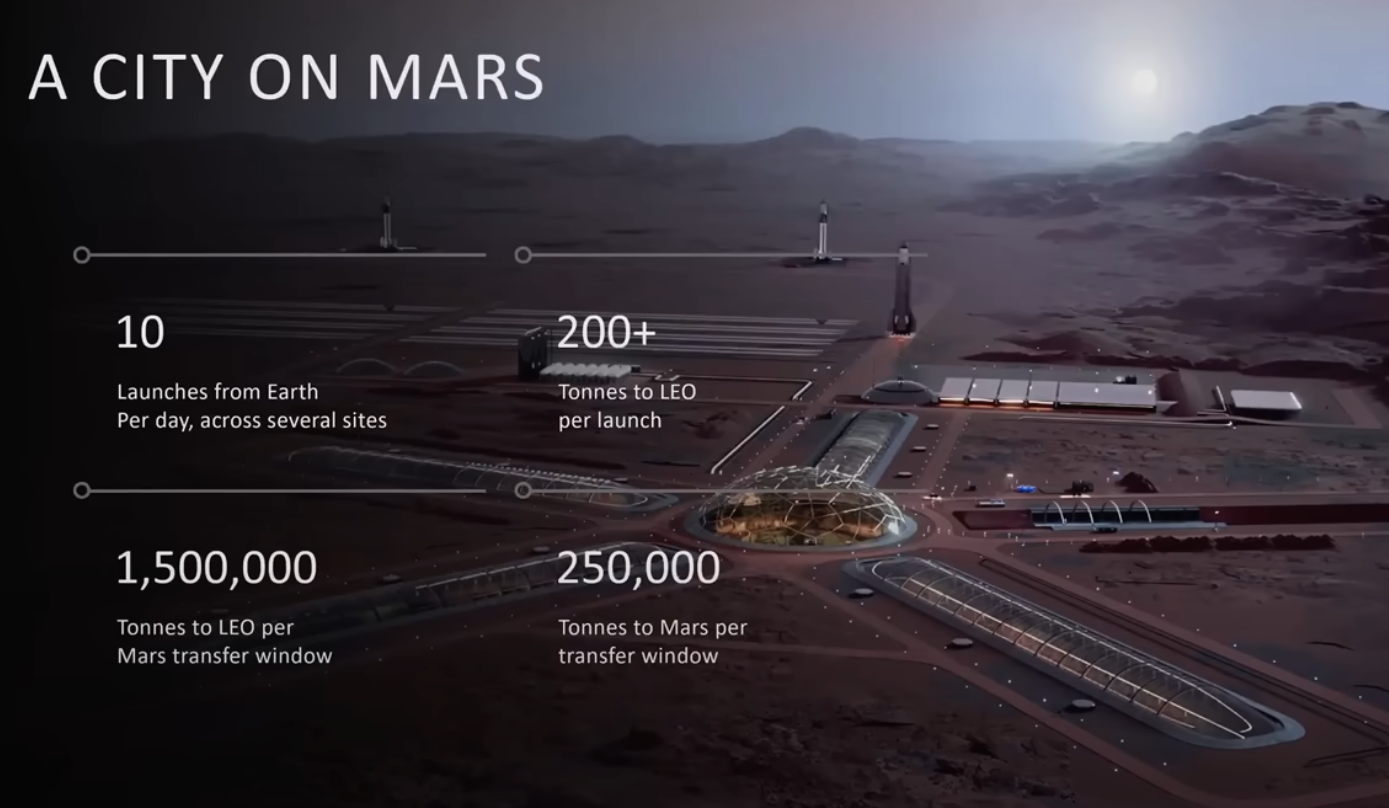
One of Musk's slides shows the domes of a city on Mars.
Life on Mars
One of the amazing features of Musk's presentation was the vision of the first city on Mars. It looks very much like the designs used by Lyndon LaRouche in his 1988 Presidential campaign proposal for a 40-year project to build a city on Mars.
Lyndon LaRouche's famous Woman on Mars campaign ad
So, we're a little behind Lyndon LaRouche's schedule, but we're catching up quickly!
Modern science is built from the bottom up — math, then physics, then life, then mind. Every great discovery was made the other way. Bruce Director on how music exposes what your mind can do that no machine ever will — and why it's the key to a new revolution in science.
The chip in your phone, the guidance in your car — all of it came from the race to the Moon. Kesha Rogers on how Apollo ignited the digital age, and why Trump's Artemis Moon base is about to do it again.
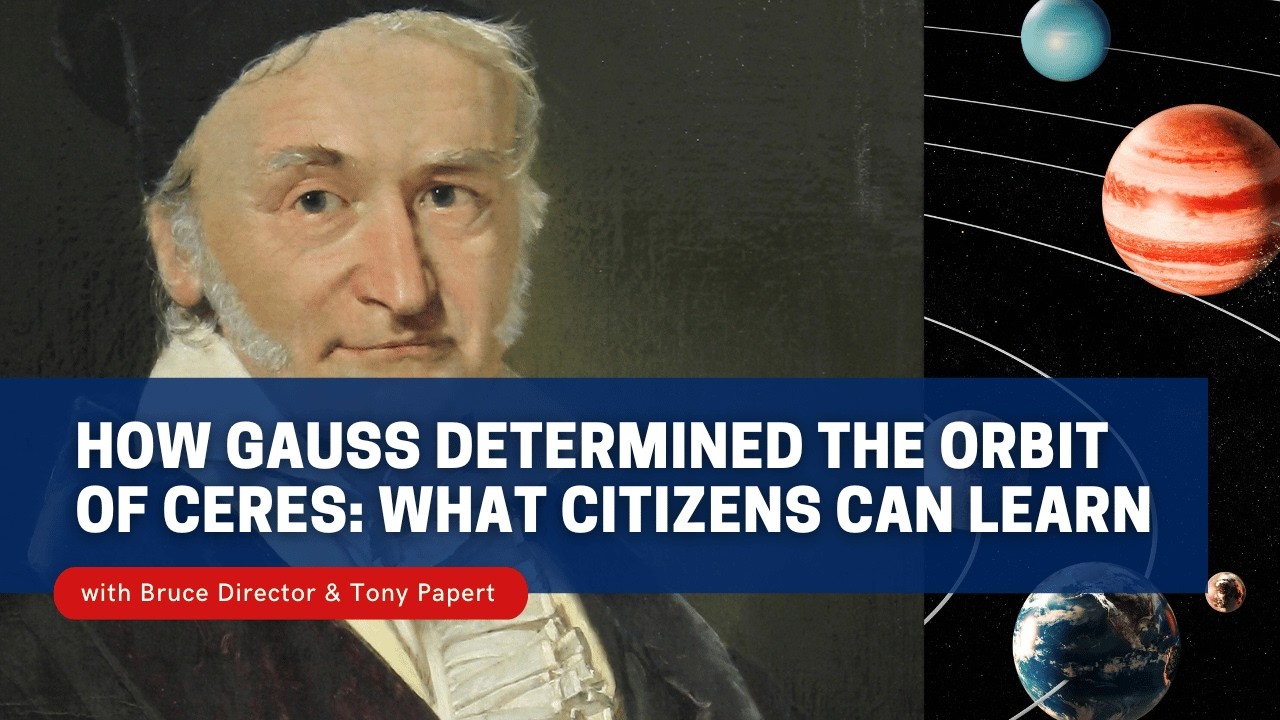
Every leading astronomer in Europe tried to find the lost asteroid Ceres with statistics. Every one failed. An unknown 24-year-old, Carl Gauss, found it from 41 days of data — by refusing to calculate and insisting on principle. Bruce Director on why that method is the cure for the age of AI.