NASA's Artemis program is accelerating America's return to the Moon. With crewed Artemis II launching April 2026, a faster SLS launch cadence, and nuclear-powered lunar bases on the horizon, the U.S. is reclaiming space leadership — and building the foundation for Mars.
Mike Steger argues Trump's Iran strategy is really about reorganizing global relations to end neocon permanent-war dynamics, framing U.S.–Russia collaboration as the decisive pivot for ending perpetual war.
While media attention fixates on Iran, a broader strategic shift is unfolding as great powers act in their own sovereign interests, with Trump identifying Zelenskyy as the obstacle to peace and Russia naming Britain as the saboteur.
Reviving American Optimism: The Artemis Program’s Bold Leap Forward
NASA's Artemis program is accelerating America's return to the Moon. With crewed Artemis II launching April 2026, a faster SLS launch cadence, and nuclear-powered lunar bases on the horizon, the U.S. is reclaiming space leadership — and building the foundation for Mars.
NASA’s Artemis program, with its bold vision of returning humans to the Moon and establishing a foundation for Mars exploration, is reigniting the spirit of discovery that defined the United States during the Apollo era. Under the leadership of NASA Administrator Jared Isaacman, sworn in as the 15th Administrator in December 2025, the program is gaining momentum to restore national pride, foster innovation, and inspire future generations. Artemis is more than a space endeavor—it’s about reclaiming America’s leadership in exploration and building a sustainable off-world future.
The program aims to create a long-term human presence on the Moon as a stepping stone to Mars. This aligns with President Trump’s national space policy, which prioritizes lunar return, permanent habitats, international partnerships, technological breakthroughs, and economic benefits in the growing space economy. By partnering closely with private companies such as SpaceX and Blue Origin, Artemis harnesses American ingenuity to accomplish feats once thought impossible.
In a few weeks, 8.8 million pounds of thrust will propel the Artemis II crew on their historic journey around the Moon - but we’re not stopping there. We’re going to launch Artemis missions every year and build an enduing presence on the lunar surface.⁰ America is returning to… pic.twitter.com/8MyR9wm3Wo
— NASA Administrator Jared Isaacman (@NASAAdmin) March 13, 2026
A major shift under Administrator Isaacman’s tenure is the revamped launch cadence for the Space Launch System (SLS) rocket and Artemis missions. Previously plagued by delays that spaced missions years apart (often every three to four years), Isaacman has pushed for a more aggressive schedule, targeting SLS launches approximately every 10 months. This addresses chronic criticisms of inefficiency, high costs, and slow progress while building operational experience and “muscle memory” for teams. In recent statements, Isaacman has emphasized accelerating toward sustained lunar operations, including more frequent missions to enable resource utilization and base development. “We can’t afford to wait,” he has stated. “The Moon is our gateway to the stars, and America must lead the way.” This increased rhythm promises to create jobs, drive technological advancements, and keep the U.S. ahead of competitors like China, whose lunar program continues to advance rapidly.
The next chapter of Artemis is about acceleration.
• Building the Moon base • Landers at the lunar south pole on a monthly cadence starting in 2027 • Nuclear power & propulsion • More science and discovery
— NASA Administrator Jared Isaacman (@NASAAdmin) March 14, 2026
One of the program’s most transformative elements is the integration of nuclear power systems for lunar bases. These will deliver reliable, long-duration energy to support extended surface stays, in-situ resource utilization (such as extracting water ice from shadowed craters for fuel, oxygen, and life support), and preparation for deeper space missions, including crewed Mars voyages. Far from science fiction, nuclear-powered habitats represent a practical foundation for humanity’s multi-planetary aspirations.
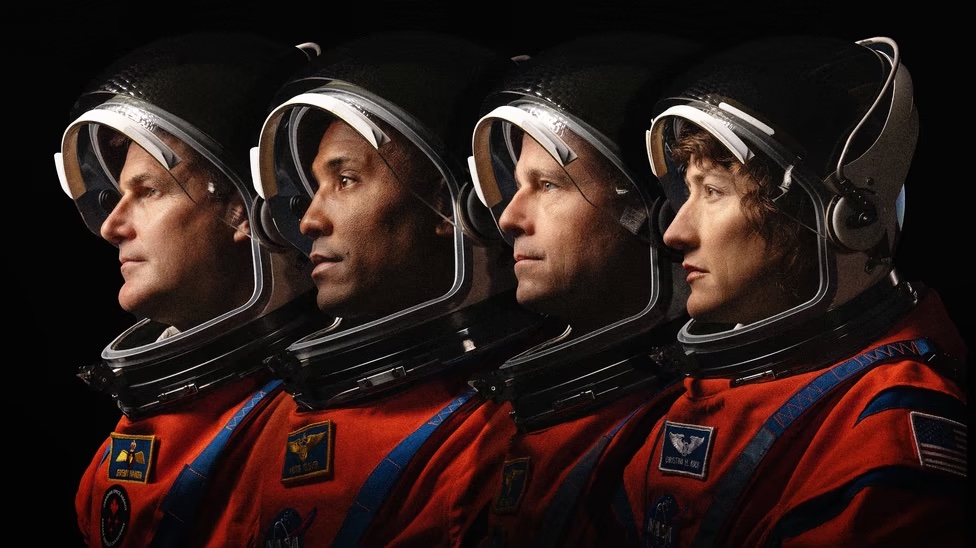
The program’s near-term excitement centers on Artemis II, the first crewed mission, set to launch no earlier than April 1, 2026. Following the SLS rocket’s rollout to the launch pad in mid-March 2026, this 10-day flight will send four astronauts on a trajectory around the Moon—venturing farther from Earth than any humans since Apollo 17 in 1972. Unlike the uncrewed Artemis I, Artemis II will rigorously test Orion’s life-support systems, navigation, deep-space communications, and crew endurance. The crew will fly past the lunar far side, collecting vital data to pave the way for future landings.
Critics often argue that space exploration diverts funds from urgent terrestrial needs. In response, during a recent exclusive interview on X with journalist Catherine Herridge on Straight to the Point, Administrator Isaacman said: “You have to be able to solve some of the hardships, some of the problems of the day while still investing in a brighter future for our kids for tomorrow. And that's what I think our space program represents. It's a quarter percent of our discretionary budget, but it's pursuing the secrets of the universe… I think that's a worthwhile price to pay.”
EXCLUSIVE: @NASA Boss Reveals New Artemis II Launch Plans And Details Ambitious 2027 Lunar Base Start Date; Says Manned Mars Missions And Humans Becoming An Interplanetary Species Within The Next Decade
Historical precedent supports this view: Apollo-era investments generated roughly seven dollars in economic return for every dollar spent. With Artemis’s emphasis on sustainability, commercialization, and public-private partnerships, the potential is even greater—through lunar resource mining, off-world outposts, and new industries that could generate billions in output and hundreds of thousands of jobs while addressing Earth’s resource challenges.
The acceleration of Artemis, particularly its push for sustained lunar operations and higher mission cadence, marks a pivotal turn toward a permanent human presence on the Moon. This isn’t just exploration—it’s a catalyst for economic growth, innovation, and optimism. In a world facing complex challenges, Artemis demonstrates that bold action and collaboration can propel humanity toward a brighter, star-bound future.
Kesha has been writing on space and science for many years. She is a big advocate for President Trump’s Artemis program, NASA, commercial space, and nuclear power.
There's no resource crisis — only a technology crisis. The critical minerals challenge proves what counts as a "resource" is defined by our technology, not nature.
The U.S. is exposed on critical minerals — not just in the ground, but in how we process them. Ben Deniston on the higher-energy technologies that could close that gap for good.
The universe isn't a machine. Bruce Director makes the case that consciousness, creativity, and Plato are coming back to science — and why that matters for everything.
Trump lost the Supreme Court tariff ruling—and immediately hit back with new tariffs. But the real story is bigger: America's productive economy has been hollowed out, and tariffs are the way back.