Scotland, Wales, and Northern Ireland’s first ministers push independence as Labour betrays Brexit. Carney’s Canada–Ukraine 100-year pact, EU associate talk, and rate-hike “noise” target Trump’s midterms.
Bruce Director digs into your comments from the Aug 29 class: why the British System is inherently entropic, why no equation can predict a creative discovery, and how frontier science backs the American System’s idea of man.
The four decades from 1861 to 1901 ". . . were the years that witnessed the most rapid and most powerful industrial, technological and scientific growth . . . in all of human history." McKinley led the fight.
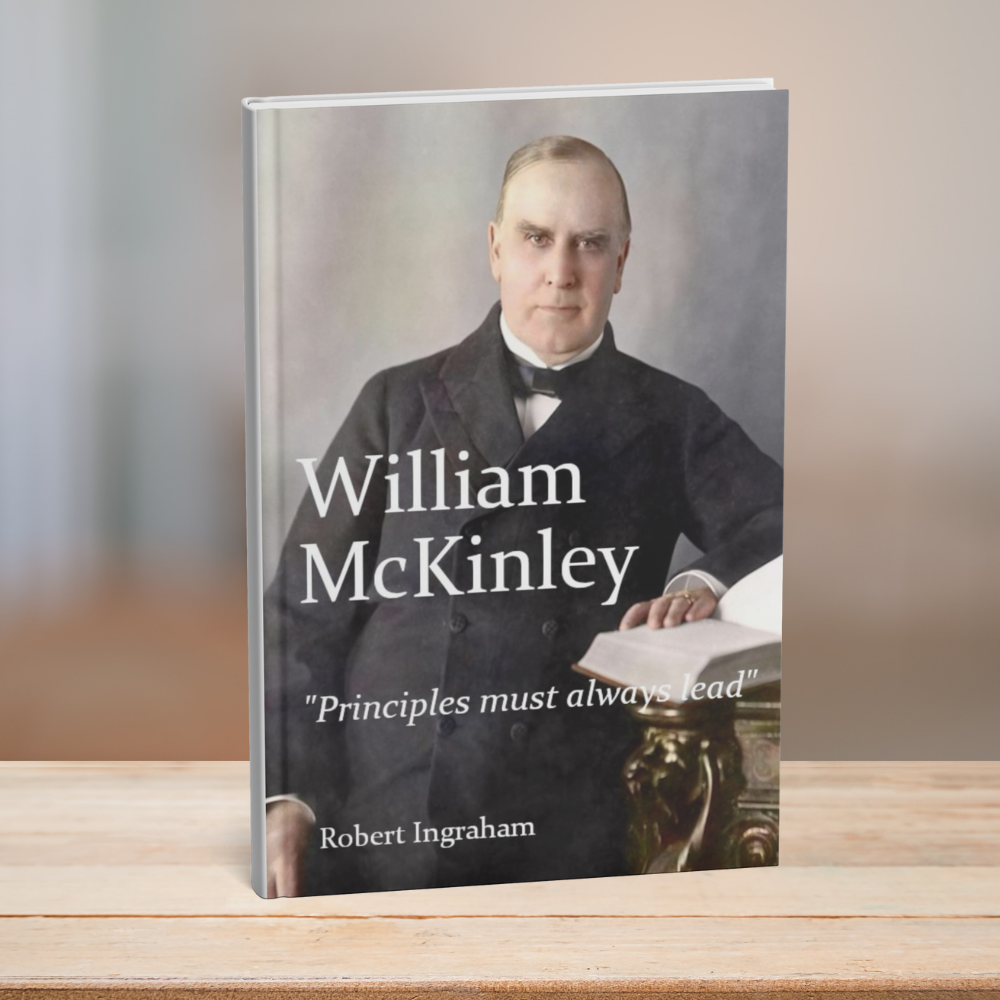
Robert Ingraham's masterpiece traces the conflict that took place in the period between the Civil War and World War I. McKinley relentlessly fought to use "American methods" to raise the productive powers and living conditions of the American worker.
In the days of McKinley, we had become the dominant industrial powerhouse. As Robert Ingraham puts it, the four decades from 1861 to 1901 ". . . were the years that witnessed the most rapid and most powerful industrial, technological and scientific growth, not only in American but in all of human history. This was the 'Era of Protectionism, . . .' " during which tariffs on imports averaged nearly 50%. For many of those decades, McKinley had led the fight to protect and develop American workers, American industries, and the former slaves.
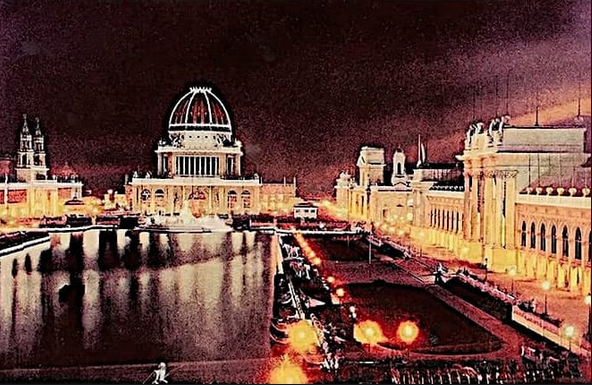
The transformative power of electrification was first displayed on a grand scale at the 1893 World's Columbian Exposition in Chicago. By 1896, Buffalo, New York, had become the first city in the world to be electrified.
The American System of Protection in Action
More than 200,000 miles of railways were built, and freight increased 500%.
The U.S. rose from 4th place to 1st place in manufacturing, including of steel, coal, and oil.
Agriculture began mechanization.
Voice, data, and video technologies were created and went intercontinental.
14,000 automobiles were already on the road by 1901.
Man began the conquest of the air.
Germany, Russia, China, Japan, and much of Latin America were moving to implement American methods on their own.
Americans could see how the future would be better! And people around the world began to think along the same lines. But the British Empire saw this progress as a threat.
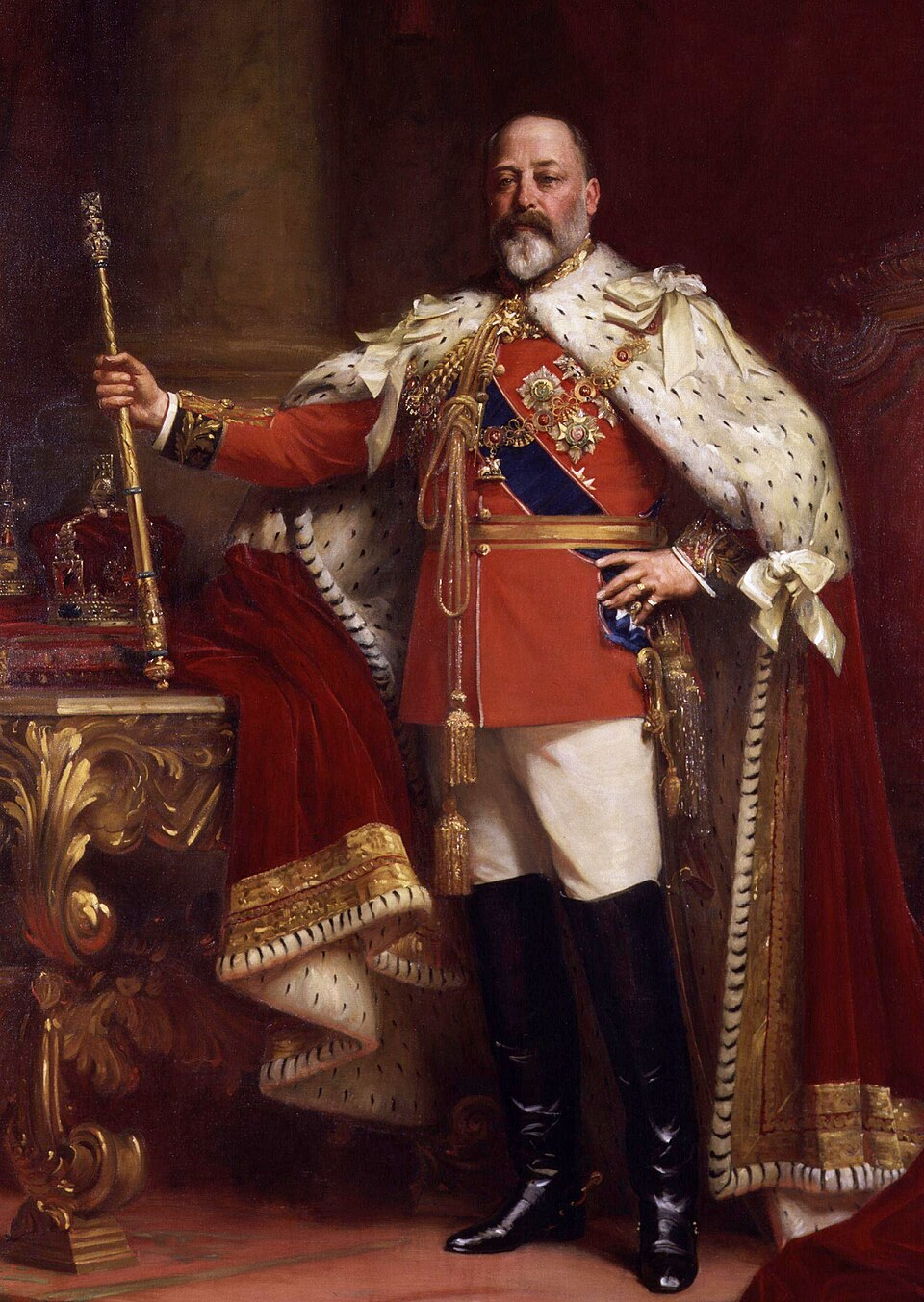
King Edward VII in the year that McKinley was assassinated. Edward spent much of his life setting up the conflict that would become World War I and thereby fully drag America into a subservient status again.
The Empire had failed to dismember America with its Confederacy and Civil War project, so other methods were pursued. In the list below, think about how many of these Imperial operations from more than a century ago seem so familiar to us today! That is because what some call the "Deep State" has its origins in the struggle of the Empire to subvert and destroy our Republic and its commitment to progress.
The Empire Moves to Sabotage Progress
London promotes and harbors the world's terrorists and Anarchist assassins.
London and its Wall Street junior partners strive to grab control of industry and agriculture.
London banks act to constrict credit to induce bankruptcies among productive enterprises in order to buy them up for pennies on the dollar.
London and allied interests work to suppress the newly freed slaves, as well as other workers and farmers.
Much effort is expended in psychological warfare, so that soon after McKinley's assassination America is put under British Imperial domination in many respects.
Before McKinley's assassination, all of the above was common knowledge and the subject of informed debate in public. After Theodore Roosevelt replaced McKinley, things changed radically.
Within a few short years, London's sway was concretized in the founding of the Federal Reserve, the FBI, the IRS, the income tax, and World War I. And American history was rewritten (or just erased) to make it appear that we had always been destined to be the junior partner to the British Empire. We had gone from industrial titan to imperial vassal.
Enter President Trump
President Trump is breaking up the "Deep State" and ending subservience to London and Wall Street oligarchical, or "globalist" interests. President Trump is successfully leading us out of the swamp of the past century and back onto the road of progress that Hamilton, Lincoln, and McKinley had charted for us. But he can't do it alone.
Every American should read Robert Ingraham's masterpiece, William McKinley: "Principles must always lead." The ability of each of us to contribute to the successful final defeat of Imperial control over our nation and the world, depends upon our assimilation and dissemination of the critical insights and ideas made exceptionally clear in this amazing book.
William McKinley: "Principles Must Always Lead" - Softcover Book
William McKinley is known today as the champion of high protective tariffs. That is most certainly true, and the McKinley Presidency was the zenith of the Era of Protection.
In 1775, Americans and Quebec militiamen fought as brothers to free Canada from the British crown. Bob Ingraham on the lie of the "invasion," Franklin's near-miss at the peace table — and why, 250 years later, the question is open again.
A full-size statue of Beethoven once stood behind the Boston Symphony. Toni Sellars and Mindy Pechenuk on how deep this music ran in 19th-century America — and who spent the next century getting it out.
Everyone quotes "the pursuit of happiness." Almost nobody can define it. In the final class of her series, Judy Hodgkiss opens Leibniz's science of happiness — the philosophy Jefferson's generation absorbed and wrote into the Declaration.
A 20-year-old George Washington crashed a party he wasn't invited to — and walked out with a poem. Judy Hodgkiss on how Alexander Pope's Essay on Man carried Leibniz's ideas from a fugitive English lord into the Declaration of Independence.