Barbara's 47-page pamphlet names the midterms enemy: an Empire that used Wall Street and the Communist mob against the American System. Five weeks out, the two systems collide at the UN, in Brazil, and at the pump.
Two conductors. One score. Two opposite ideas of man. This week's Class puts Furtwängler against Toscanini — and tonal against atonal. The fight over your ear is the fight for your children's future.
Media howled over an autopen joke and the Xi summit—while Trump dismantles Kissinger’s 50-year framework, Xi says the Thucydides Trap can be overcome, and Rubio permanently holds both State Dept. and National Security Advisor.
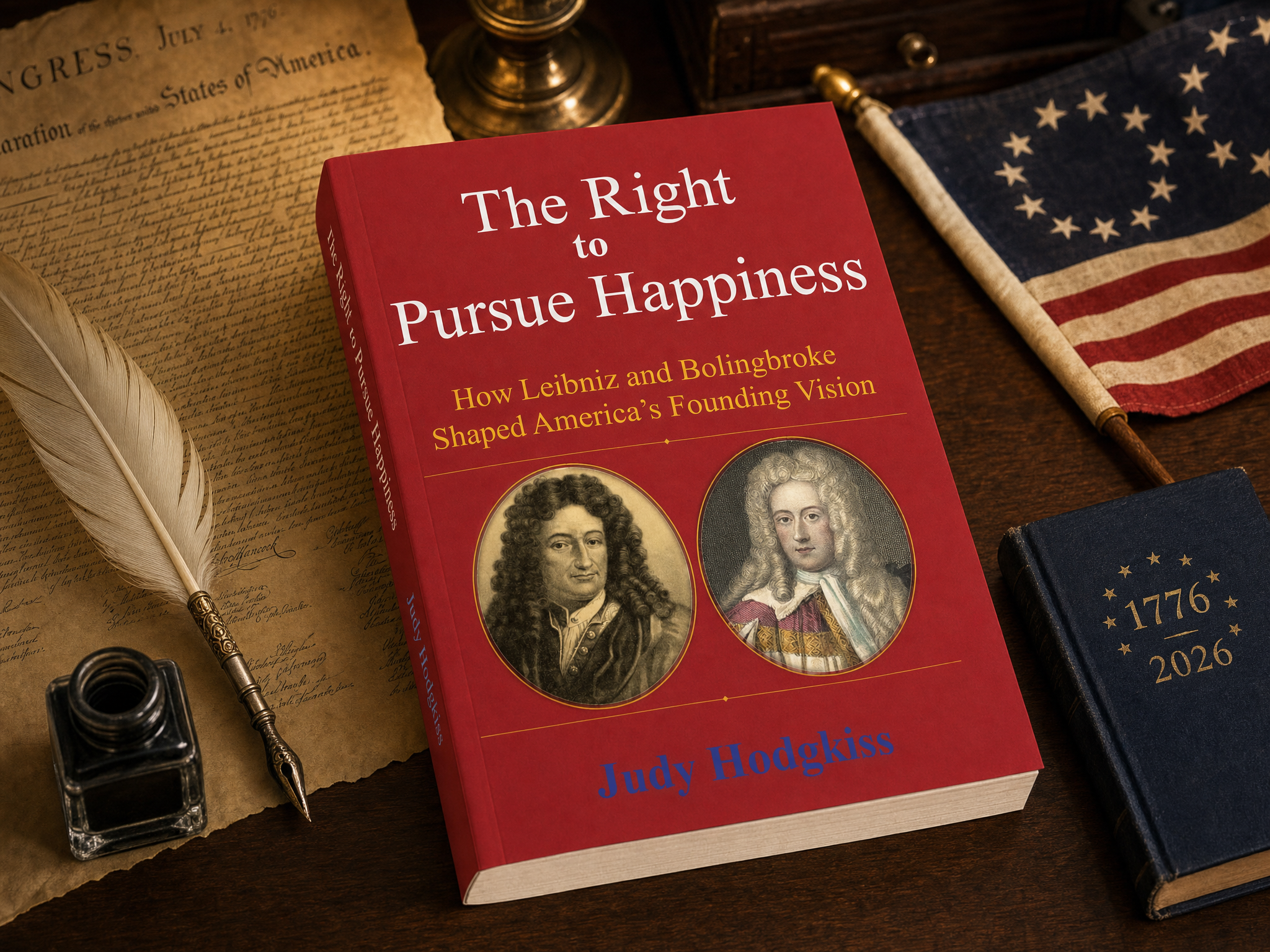
Saturday Class - The Right to Pursue Happiness - June 27, 2026
Everyone "knows" the Declaration came from John Locke. Judy Hodgkiss says that's the British version of our history. The real source of "the pursuit of happiness" was Leibniz — carried into the colonies by a disgraced English lord and straight to Jefferson's desk.
Your teacher told you the Declaration came from John Locke.
It didn’t.
The most American phrase ever written — the pursuit of happiness — was smuggled into the colonies from a German philosopher, by a disgraced English lord.
We all know the words: we are endowed by our Creator with certain unalienable rights — among these life, liberty, and the pursuit of happiness.
Open almost any history of the Founding and the index tells the same story: page after page on John Locke, with a few nods to Voltaire. The pursuit of happiness, we’re taught, was a tidy upgrade to Locke’s “life, liberty, and property” — the cold arithmetic of a social contract.
In this week’s Saturday Class — drawn from her brand-new book — Judy Hodgkiss says that account is not just incomplete. It’s the British version of our own revolution, handed down by historians who never checked the paper trail.
“The way I see this book is as a weapon — mowing down entire rows of pompous historians. Because they’ve been lying to you.” — Judy Hodgkiss
The Right to Pursue Happiness: How Leibniz and Bolingbroke Shaped America's Founding Vision
The 250th anniversary of the Declaration of Independence demands a serious reckoning with the nation's true history. Conventional historians have told you that the Declaration's immortal phrases—"endowed by their Creator with certain unalienable Rights...Life, Liberty and the pursuit of Happiness"—emerged from the cold calculations of a "social contract", as in a business agreement. This book shatters that materialist narrative.
The phrase Jefferson chose — and the one he rejected
Two months before Jefferson wrote his draft, the Continental Congress issued an earlier resolution, written largely by John Adams. It defended the rights of Englishmen to “life, liberty, and property.” That is Locke, almost word for word — for Locke, the right to property was the most fundamental right of all.
Then look at Jefferson’s rough draft. The corrections crowded above the lines are in other hands — Adams’s, Franklin’s. But the famous phrase is not a correction. In Jefferson’s own handwriting, on his own line, he wrote life, liberty, and the pursuit of happiness.
As Judy puts it, you are watching Jefferson make a choice — and “that has made all the difference.” He didn’t reach for property. He reached for happiness. The question is: where did that idea come from?
Two ideas of what a human being is
The real divide of the era wasn’t about tea or stamps. It was theological — a fight over human nature itself.
Locke’s man is a blank slate: born with no disposition toward good or evil, stumbling into society through arbitrary contracts. A good deal or a bad deal — nothing in him points one way or the other.
The opposing view, carried by Gottfried Leibniz, holds that man is born with a disposition toward the good, made in the image of God — and that the moral order isn’t arbitrary at all. Government’s purpose is to discover God’s intention and extend the greatest happiness possible.
“God is the monarch of the most perfect republic… happiness is to persons what perfection is to beings.”
— Leibniz, Discourse on Metaphysics, 1686
Plenty of thinkers — Locke and Voltaire included — used the word happiness. What’s unique to Leibniz is the claim that extending it is a divine mandate. Or, as he put it elsewhere: wisdom is the science of happiness.
The disgraced lord who armed the idea
Leibniz was a philosopher. The man who turned his ideas into political dynamite was Henry St. John, Lord Bolingbroke — a Tory leader whose bestselling tract, The Idea of a Patriot King (1738), circulated everywhere in the colonies.
“The divine right of a king to govern ill is an absurdity… God has made us to desire happiness, has made our happiness dependent on society, and the happiness of society dependent on good government.”
— Lord Bolingbroke, The Idea of a Patriot King
Thirty years before independence, Bolingbroke was already arguing that a king who governs badly forfeits his right to rule — and that man, made in God’s image, has a duty to imitate God in building government. Benjamin Franklin printed the book himself, reporting that no work in England had ever “had so great a sale.”
The paper trail straight to Jefferson
This isn’t a hunch. Judy lays out the chain of custody:
George Wythe — Jefferson’s mentor at William & Mary and a committed Bolingbrokean, whose library held a rare eight-volume set of Bolingbroke’s writings. He worked side by side with Jefferson on Virginia’s response to Congress.
James Wilson — author of much of the Constitution and one of the first Supreme Court justices. In a lecture attended by George Washington and the Adamses, he told his students to learn from Bolingbroke, quoting him at length and from no other author.
Gilbert Chinard — a French-American Princeton scholar who set out in 1929 to prove Voltaire shaped Jefferson, and found the opposite. Jefferson’s masters, he wrote, were the Greeks, then Cicero and Horace, “and finally Bolingbroke” — not the French.
Why this is really a fight about money
Strip away the philosophy and you find a financial war underneath. The Whig party stood for the Bank of England, the British East India Company, and the South Sea Company — all modeled on the Bank of Amsterdam and the Venetian-Dutch oligarchy behind it.
John Locke himself helped found the Bank of England. The Tories around Bolingbroke were the ones fighting the financial speculators. As Judy reminds us, economics, theology, science, and culture were never separate departments — they were one fight, then as now.
A culture worth fighting for
Bolingbroke’s circle — the “Brothers Club,” with Swift and Alexander Pope — didn’t just write pamphlets. They revived Shakespeare and championed Handel, and that cultural renaissance crossed the Atlantic into the colonies. Leibniz understood why that mattered:
“Reasons alone are not sufficient… something is needed which affects their passions and ravishes their souls, as does music and poetry.” — Leibniz
What it asks of us in 2026
This was Part 1. Judy promises the next class will go deeper into Leibniz’s philosophy — and, believe it or not, make the case that even the calculus is a study in happiness.
But the stake is already clear. In the 250th year of the Republic, the question Jefferson answered in his own hand is the same one we face today: do your rights come from God, or are they a contract someone else can revise?
Watch the class and discover the real, hidden lineage of America’s founding idea.
Founding member of the LaRouche movement in the 1960s. Former editor of LaRouche’s writings and EIR magazine. Regular host of our Saturday class series.
Two conductors. One score. Two opposite ideas of man. This week's Class puts Furtwängler against Toscanini — and tonal against atonal. The fight over your ear is the fight for your children's future.
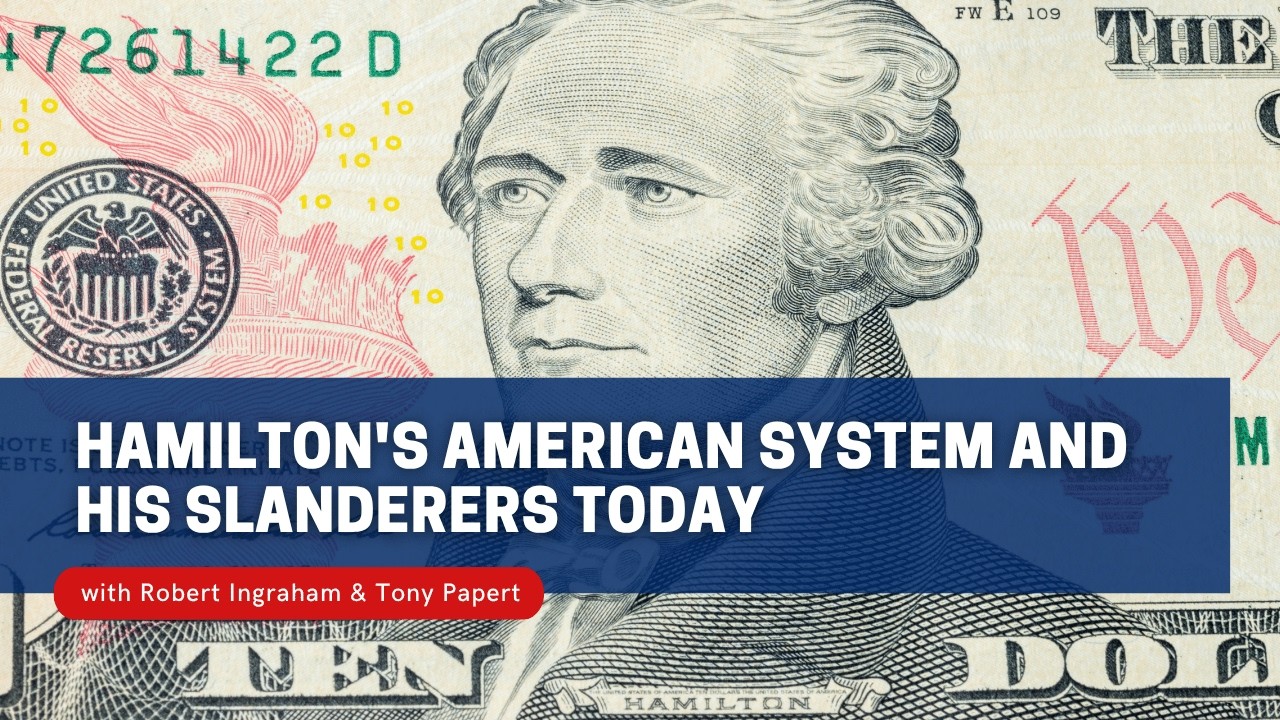
Bob takes on the slanders against Alexander Hamilton and the British-finance axioms most Americans still carry — and why Hamilton's bank is not the Fed.
Bruce Director digs into your comments from the Aug 29 class: why the British System is inherently entropic, why no equation can predict a creative discovery, and how frontier science backs the American System’s idea of man.
Cable news is arguing eggs, beef, gas, and Iran. Bruce Director spent Saturday night on the real midterm question: American System vs. British System — two flavors of the same entropy, and nine weeks to pick a future.