The Gulf’s trillions used to land in London. Not anymore. The strait that stopped mattering, the “grassroots” that turned out to be billionaires — and your 10-to-15-person assignment before November.
Trump and Bessent are dismantling the offshore financial system that has looted nations for decades. Could the rescue of Japan’s yen be the opening move in a new global order?
Join us LIVE next Thursday! Not a bombing campaign — an ultimatum to every bank, registry, and swap line keeping Tehran alive. We dig into who the enablers are, and why the Kim summit is the other half of the story.
Left: Alameda Point zoning map showing the Enterprise District. Right: A close-up view of the Pacific Fusion project area. Image presented at the February 18, 2025 City Council meeting, Agenda #7-B, Presentation.
The City Council of Alameda, California has approved an Exclusive Negotiating Agreement with the company Pacific Fusion to pursue a plan to develop a site for a nuclear fusion test project in the near term. The support from the City Council and the public for the move on February 18th was enthusiastic. Despite the presence of the Lawrence Livermore National Lab in the county, Alameda’s energy approaches have previously only featured plans to advance solar power, carbon capture, and similar insufficient modes of power technology.
Pacific Fusion joins more than 40 other companies nationally developing concrete plans for near term fusion energy production and power plants, a nuclear power renaissance fully backed by President Donald Trump. According to Nuclear Newswire, its development team includes veterans from Lawrence Livermore’s successful inertial confinement experiments.
Pacific’s approach, however, is somewhat unique. It uses an inertial fusion geometry, compressing the fusion fuel with pulsed implosions, rather than a sustained magnetic field. The particular design is called magnetic liner fusion or fast liner fusion. Unlike many inertial fusion designs, MagLIF does not use lasers, but extremely intense pulses of electricity to magnetically compress the fuel which is contained within a small metal tube or liner. The design approach is modular and mobile, creating the basis for multiple applications, including in manufacturing.
Pacific Fusion plans to demonstrate “net facility gain”, producing more energy from a fusion blast than the stored energy producing the blast, by the end of the decade. Then they would move to building a demonstration plant for electric power production, within five years.
Magnetic liner fusion has an interesting history going back to the 1970’s. This technology has consistently been worked on by the nation’s Sandia Lab in Albuquerque. Early on, there was a potential for U.S-Soviet collaboration on this technology. The Soviets had a much more developed program, but the U.S. had a huge capacitor bank, thanks to the shutdown of another program at Sandia. The U.S. scientists were all in favor of going ahead with collaboration and so were the leaders of the U.S. intelligence community, but apparently someone at the top of the DOE kiboshed the deal.
Not only that, but under British pressure, the entire U.S. MagLIF program was put under classification wraps. This stifled the program for many years.
Fortunately MagLIF was kept alive at Sandia. Pacific is banking on a pulser using impedance-matched Marx generator (IMG) technology (invented in 2017 and “demonstrated in action at Lawrence Livermore in 2022”) to deliver an intense, 100-nanosecond burst of energy by accounting for electromagnetic-wave propagation and “stacking waves,” as opposed to the “stacking voltage” approach of conventional pulser technology. With IMG, internally reflected waves cancel, leaving only forward-going waves, according to a technical paper produced by Pacific Fusion concerning its approach.
You can see how this innovative approach works by going to Pacific Fusion’s website.
Four new nuclear reactors went critical in a single month — America's first in 40 years. Brian Lantz on the factory boom the media won't name, and the apprenticeship programs that pay you to help build it. The hardest problem was never the physics.
Modern science is built from the bottom up — math, then physics, then life, then mind. Every great discovery was made the other way. Bruce Director on how music exposes what your mind can do that no machine ever will — and why it's the key to a new revolution in science.
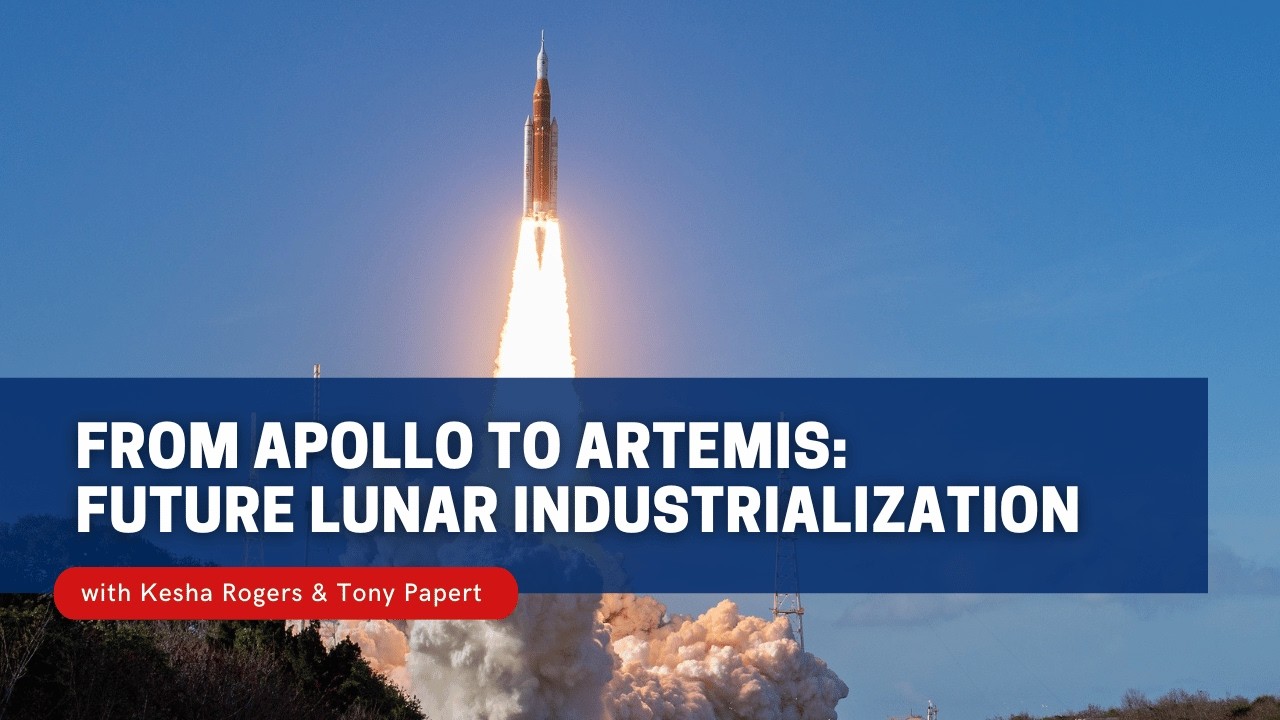
The chip in your phone, the guidance in your car — all of it came from the race to the Moon. Kesha Rogers on how Apollo ignited the digital age, and why Trump's Artemis Moon base is about to do it again.
Every leading astronomer in Europe tried to find the lost asteroid Ceres with statistics. Every one failed. An unknown 24-year-old, Carl Gauss, found it from 41 days of data — by refusing to calculate and insisting on principle. Bruce Director on why that method is the cure for the age of AI.